
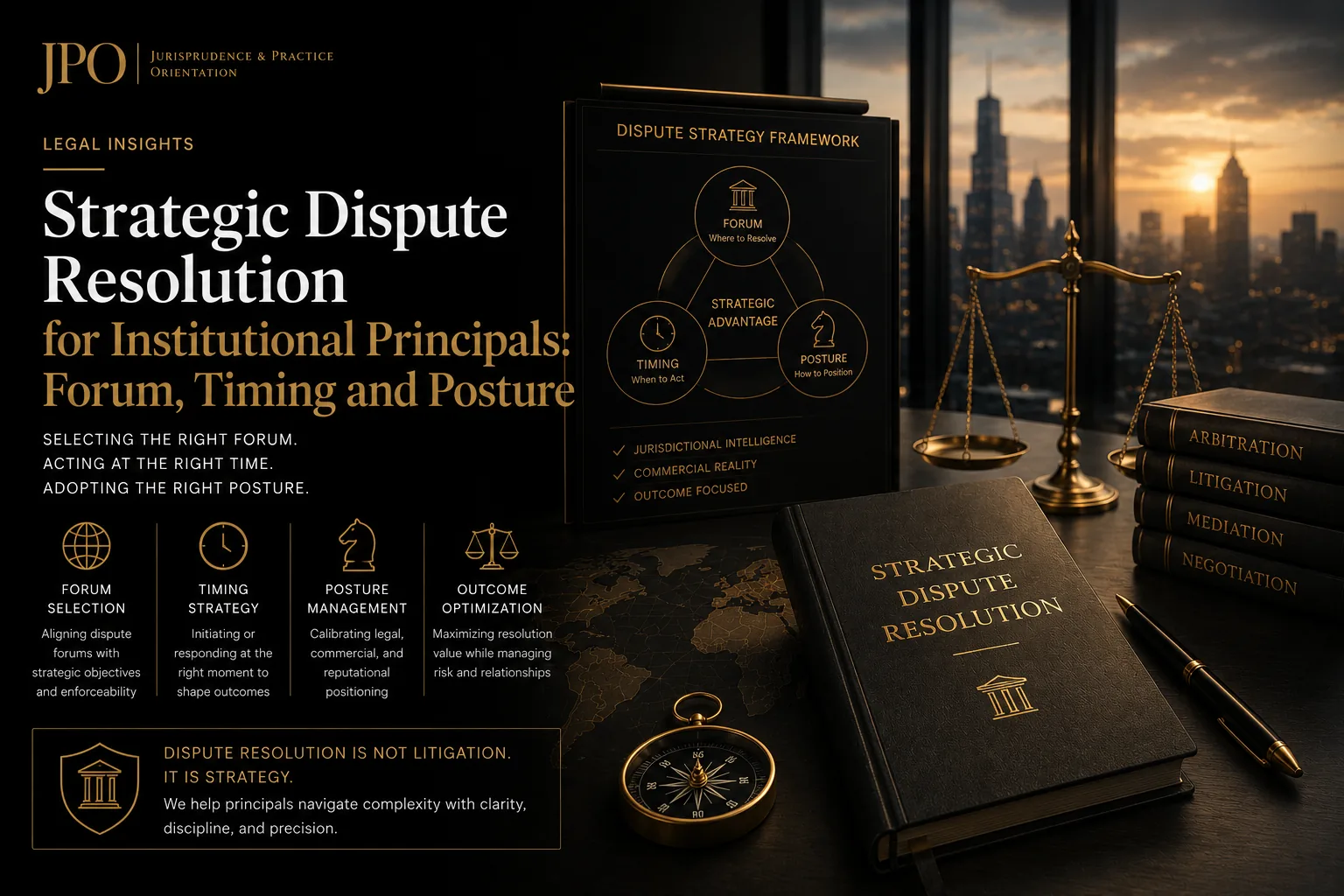
Strategic Dispute Resolution for Institutional Principals: Forum, Timing and Posture
Contemporary disputes are won upstream of the courtroom. An examination of forum selection, timing of escalation, evidentiary preservation and the institutional posture that determines outcome.
- Published
- 2026-05-06
- Reading time
- 8 min
- Desk
- Dispute Resolution
- Citation reference
- JPO · IV · 2026
Executive Summary
isputes that reach trial are usually disputes that were managed reactively. Institutional principals win contested matters through upstream discipline: early evidentiary preservation, deliberate forum architecture and an institutional posture that signals capacity without inviting escalation.
JPO's contentious practice is structured to operate at this upstream layer — alongside courtroom advocacy when required.
Key Legal Issues
Forum selection (Thai courts, ASEAN seats, international arbitration), enforceability of awards across the principal's asset footprint, evidentiary preservation under privilege, interim relief availability, and the strategic use of confidential negotiation tracks parallel to formal proceedings.
Strategic Analysis
The decisive variables are timing and posture. Institutional principals who engage senior counsel before formal escalation routinely shape forum, framing and evidentiary record in their favour. Those who engage after escalation typically inherit choices already made by the counterparty.
JPO operates contested matters as institutional engagements: case theory, evidentiary discipline, forum architecture and confidential settlement strategy are coordinated under partner supervision.
Risk Assessment
Principal exposures: hostile forum capture, loss of privileged record through informal communications, asset dissipation prior to interim relief, and reputational escalation through media-adjacent counterparties. Each is a function of timing as much as of substance.
Institutional Commentary
JPO observes that contested matters managed under institutional discipline rarely require maximalist litigation. The signal of capability — coordinated counsel, prepared evidentiary record, credible forum positioning — is itself a settlement instrument.
Conclusion
Strategic dispute resolution is institutional. The principals who engage early, document well and posture credibly are the principals who do not need to litigate maximally — and who prevail when they do.
Prepared by Justice Protection Office — International Counsel to Principals.
- IEnergy & Infrastructure
Concession Risk and Sovereign Counterparty Exposure in ASEAN Power Projects
Read briefing → - IICross-Border Transactions
Cross-Border Transactions in ASEAN: Structuring for Regulatory Asymmetry
Read briefing → - IIILegal Intelligence
Building an Institutional Legal Intelligence Function for the Modern Boardroom
Read briefing →